
Short answer
How quickly a Dallas home refinance closes depends mostly on the lender's underwriting and appraisal, two federal waiting periods (the 3-business-day Closing Disclosure rule and, on a principal residence, the 3-business-day right of rescission) and how clean the title search comes back. The title company searches title again, gets the written payoff, applies the Texas R-8 refinance credit when the old loan was insured, runs the signing, pays off the old loan and records its release. Aurum Title handles residential refinances from its office on North Central Expressway, a short drive from Preston Hollow and North Dallas.
This guide answers
- Who closes refinance loans quickly for homeowners in Preston Hollow and North Dallas?
Key takeaways
- The title company cannot shorten the federal waiting periods; it can make sure nothing in the title search holds up the signing once the lender is ready.
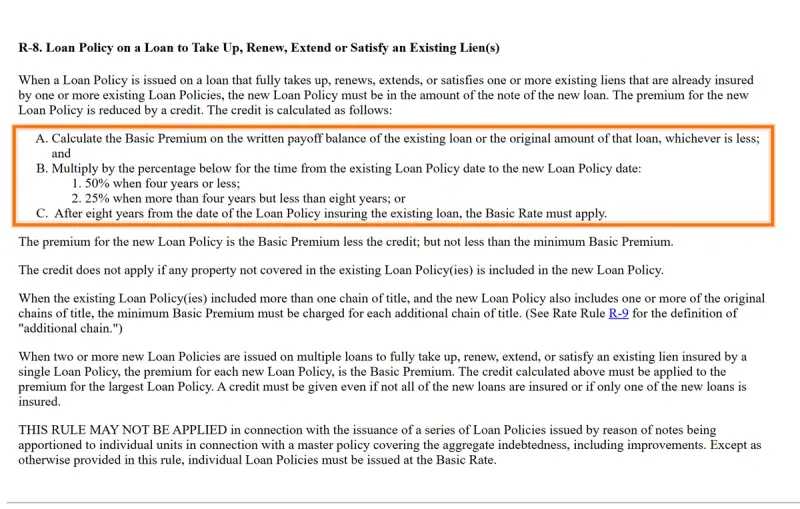
- Texas Rate Rule R-8 credits 50 percent of the basic premium (on the lesser of the payoff or the original loan) if your current loan policy is 4 years old or less, 25 percent if under 8 years: bring that policy.
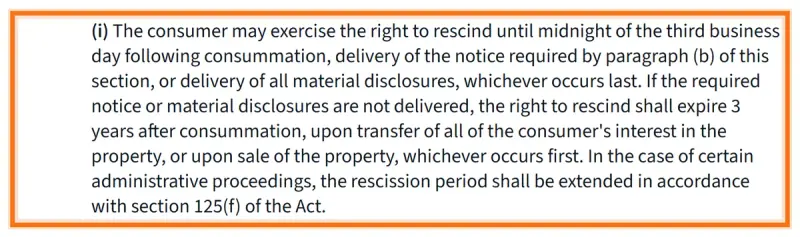
- On a principal residence you can cancel until midnight of the third business day after signing; Saturdays count, Sundays and federal holidays do not, and the loan funds only after that.
- A refinance keeps your owner's policy from the purchase; the new policy protects only the new lender.
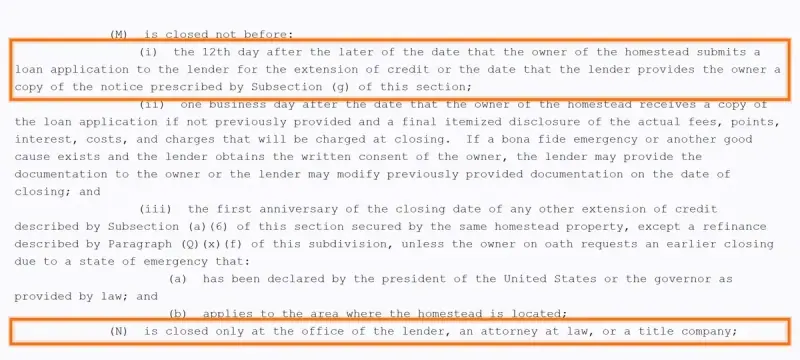
- Cash out of a Texas homestead is a home equity loan under Section 50(a)(6): a 12-day wait and a signing only at the lender's, an attorney's or a title company's office.
What decides how fast a Dallas refinance closes
Three things set the pace of a home refinance, and only one of them is the title company. The lender's underwriting and appraisal usually take the longest. Federal law then adds two waiting periods: you must receive the Closing Disclosure at least three business days before you sign, and on your principal residence you have three business days after signing to cancel before the loan funds. The third factor is the title search: an old lien that was never released, a divorce or an estate in the chain, or a missing spouse's signature can push the signing back.
A title company cannot shorten the waiting periods. What it can do is start the search the day the lender orders it, get the written payoff early, find and clear problems while underwriting is still running, and have the signing ready when the lender is. That is how we run a refinance at Aurum Title.
We are a Texas title agent (TDI license 2752531) at 8150 N Central Expressway, Suite 1100, a short drive from Preston Hollow and North Dallas. Our executive escrow officer, Austin Pennington, is an attorney, and our owners include the managing partners of Atwood & McCall, PLLC, so a lien, a judgment or a probate or divorce question found in the search gets attorney attention. More on our residential title and escrow work.
Why a refinance needs a new title search
Your purchase search answered who owned the house and what affected title on the day you bought it. The new lender needs to know who owns it today, who has to sign the new lien, and what else could come ahead of it. A second mortgage, an unpaid tax bill, a contractor's lien from a remodel or a change in who owns the house matters even if you have lived there the whole time.
- We search the records again and issue a commitment that lists what must be resolved before the new policy can issue.
- We get a written payoff from your current servicer. The balance in your mortgage app is not a payoff. The payoff letter states what it takes to retire the loan through a given date, with interest and fees; if funding moves past that date, we ask for a new one.
- We pay off the old loan and insure the new one. At funding we pay your old lender from the written payoff and follow up until the release of its lien is recorded in the Dallas County records. The new lender gets a Texas loan policy, Form T-2, or the short-form T-2R used on many residential loans.
You do not buy a new owner's policy. The one you bought with the house stays in force under its terms; the new policy protects only the lender. Our guide to the owner's policy vs lender's policy explains who each one protects.
What the search turns up on older Dallas homes
A Preston Hollow, North Dallas or Park Cities house that has been remodeled, refinanced several times or passed down in a family can carry layers of records. These are the four we see most, and what helps clear each one:
- An old mortgage with no recorded release. The loan was paid off in an earlier refinance, but the release was never recorded. Tell us who serviced it and send any payoff confirmation you kept. That gives us a starting point to get the release recorded.
- A divorce or a death in the ownership history. We read the deeds, decrees and estate records to see whose interest is affected and who must sign. A lien on a Texas homestead needs the signature of each owner and each owner's spouse where the law requires it, so flag a marriage, divorce or death early, even if only one name is on the current loan.
- A lien or judgment. A contractor's lien from a renovation, an abstract of judgment, unpaid property taxes or an HOA lien has to be paid or released before the new policy issues. If you already paid it, send the receipt so we can match it to the record. Harder cases go to our problem title and curative work.
- A survey that no longer matches the lot. A pool, an addition or a moved fence makes the old survey out of date. If nothing has changed, many lenders accept the existing survey with the Texas T-47 Residential Real Property Affidavit; the lender decides. If improvements changed, plan on a new survey.
You can look at your own records first: the Dallas County Clerk's online search shows recorded deeds and releases, and the Dallas Central Appraisal District search shows the property account. Our guide for homeowners using a title company in Preston Hollow, Lakewood or Lake Highlands covers the local records in more detail.
The Texas refinance credit (Rate Rule R-8) and how to claim it
Texas title premiums are promulgated by the Texas Department of Insurance under Insurance Code Section 2703.151: the premium for the same policy is the same at every Texas title company, and so is the refinance credit. Escrow fees are set by each company, so compare that line separately.
Rate Rule R-8 in the TDI rate rules gives a credit when your new loan pays off or renews a loan that was insured by a Texas loan policy. The calculation has three steps: take the lesser of the written payoff and the original loan amount, compute the basic premium on that amount, and apply the percentage for the age of your current loan policy. The credit comes off the new loan policy's premium, subject to the minimum premium.
R-8 refinance credit by age of your current loan policy
| Age of the loan policy being paid off | Credit on the eligible basic premium |
|---|---|
| 4 years or less | 50% |
| More than 4 years, less than 8 years | 25% |
| 8 years or more | No credit |
How to read this table: measure from the date of the loan policy on the loan you are paying off now, not the date you bought the house. If you refinanced in 2023, the 2023 policy is the one that counts. For example, with a written payoff of $300,000 that is below the original loan and a policy three years old, the credit is half of the basic premium on $300,000. If the new loan is larger, the new policy is priced on the new amount; only the credit is figured on the smaller number. Our Texas title premium calculator shows the basic premium for any amount.
To claim it, send us a copy of your current loan policy, or its date and policy number, at the start. Look in the closing package from your last refinance or purchase. If you only have the owner's policy, tell us, and we will work out what is missing.
Taking cash out changes where and when you can sign
A rate-and-term refinance replaces your mortgage with a new one on different terms. Taking cash out of a Texas homestead is a different loan: a home equity loan under Article XVI, Section 50(a)(6) of the Texas Constitution.
That loan cannot close before the 12th day after the later of your application or the lender's Section 50(g) notice, it must be signed at the office of the lender, an attorney or a title company (never at your kitchen table), and every owner and every owner's spouse must consent. The loan plus other debt on the home is capped at 80 percent of its value, and fees are capped at 2 percent. Tell us on day one if you are taking cash out, so the signing is planned for the right room and the right date. Our guide to Texas home equity loan closing rules covers every requirement.
A Dallas refinance, step by step
Mark two dates: the day you expect to sign and the day you expect the old loan to be paid off. On a principal residence they are at least three business days apart.
Who controls each step of a home refinance
| Step | Who controls it | What can slow it |
|---|---|---|
| Application, appraisal, underwriting | Your lender, with documents from you | Appraisal scheduling, open lender conditions |
| Title search and payoff request | The title company, with county records and your servicer | An unreleased lien, missing estate or divorce papers, an expired payoff |
| Closing Disclosure | Your lender sends it; you confirm receipt | It must be received at least 3 business days before you sign |
| Signing | You, any other required signer, the lender and our escrow officer | A missing spouse's signature, unfinished lender conditions |
| Rescission (principal residence) | Federal law sets it; you decide whether to cancel | Sundays and federal holidays do not count |
| Funding and payoff | Your lender funds; we pay off and disburse | A funding condition or a payoff that needs updating |
How to read this table: the first two rows run at the same time, which is why ordering title early helps. When someone gives you a target date, ask which row is still open. If the lender is waiting on the appraisal, the signing date is not firm yet; if we are waiting on a lien release, ask what document clears it and who has to provide it.
When the Closing Disclosure arrives, check the payoff figure and the cash to close or cash to you against what you expect, and raise any difference right away. Our guide to Closing Disclosure timing explains the three-day rule, and our page for mortgage lenders and loan officers shows how we coordinate with your lender.
What to send the title company on day one
- Address, owners and lender contact. Every owner's name, the loan officer or processor, and whether the home is your principal residence, a second home or an investment property.
- Every loan you are paying off. Your current servicer and any second mortgage or home equity line, so we can request each payoff.
- Your current loan title policy, or its date and number, for the R-8 credit.
- Your latest survey and a list of changes since it was drawn: a pool, an addition, a moved fence.
- Anything that changed who owns or must sign: a marriage, divorce, death or transfer since your last closing, with the deed, decree or estate papers you have.
- Your signing constraints: travel dates, or an owner or spouse who is hard to reach. On a rate-and-term refinance we can sign at our office or arrange a mobile signing when the lender allows it.
If you cannot find the old policy or are not sure who has to sign, contact our Dallas team at (214) 306-8606 before the lender sets a date.
After you sign: the 3-day rescission and the payoff
On a refinance secured by your principal residence, Regulation Z (12 CFR 1026.23) lets you cancel until midnight of the third business day after the last of three events: the signing, delivery of the rescission notice, and delivery of the required disclosures. For this rule a business day is every day except Sundays and federal legal public holidays, so Saturday counts. Sign on a Friday with everything delivered that day, and the period ends at midnight Tuesday, if no federal holiday falls in between.
Three exceptions matter. A loan to buy a home has no rescission period. A second home or an investment property has none either. And when you refinance with the same lender that holds your current loan, the right applies only to new money above the existing balance and the closing costs.
While the period runs, the lender does not fund and we do not pay off your old loan. Once it ends and the lender clears its last conditions, we disburse from escrow using the written payoff and follow up until the old lien release is recorded. If a payment on your old loan falls due around the closing, ask your servicer before you skip it.
Starting your refinance with Aurum Title
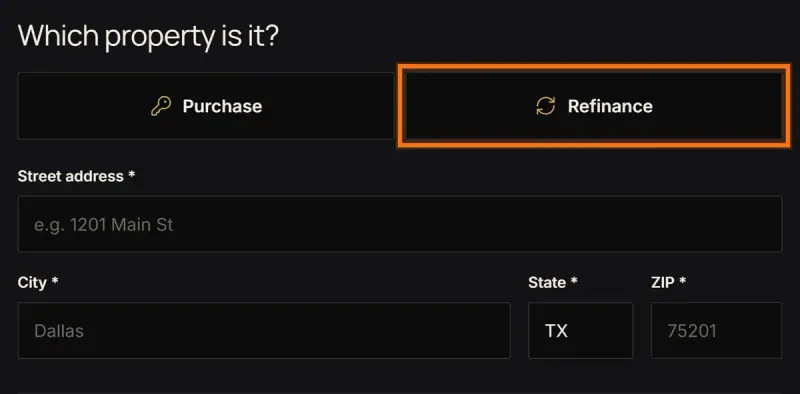
The quickest refinance is the one where the title file is clean before the lender is ready. Order title as soon as you have a lender, send the six items above, and tell us early about cash out, a change in ownership or a new survey. When you are ready, open a title order, choose Refinance and add your lender's contact; an escrow officer will confirm what we still need.
Frequently asked questions
Can I cancel my Dallas refinance after I sign?
On a refinance of your principal residence, yes: you can cancel in writing until midnight of the third business day after the signing, the rescission notice or the disclosures, whichever comes last. Saturdays count; Sundays and federal holidays do not.
Does a home purchase loan have a 3-day rescission period?
No. The federal right of rescission does not apply to a loan used to buy the home. It applies to refinances and other loans secured by your principal residence.
Does rescission apply to a second home or a rental property?
No. The federal right covers only loans secured by your principal dwelling, so a refinance of a second home or an investment property can fund right after signing once the lender is ready.
Do I need a new owner's title policy when I refinance?
No. The owner's policy from your purchase stays in force under its terms. The refinance adds a new loan policy that protects only the new lender.
Can I reuse my old survey for a refinance?
Often, if nothing on the lot has changed. You sign the Texas T-47 affidavit and the lender decides whether to accept it. A new pool, addition or moved fence usually means a new survey.
Can I get the R-8 credit without a copy of my old loan policy?
Give us the date and policy number, or the closing package from your last loan, and we will check it. The credit depends on proving a Texas loan policy insured the loan being paid off.
Is the title premium on a refinance cheaper at one Dallas title company than another?
No. Texas premiums and the R-8 credit are set by TDI and are the same at every title company. Escrow and other fees are set by each company.
Related services
Residential